

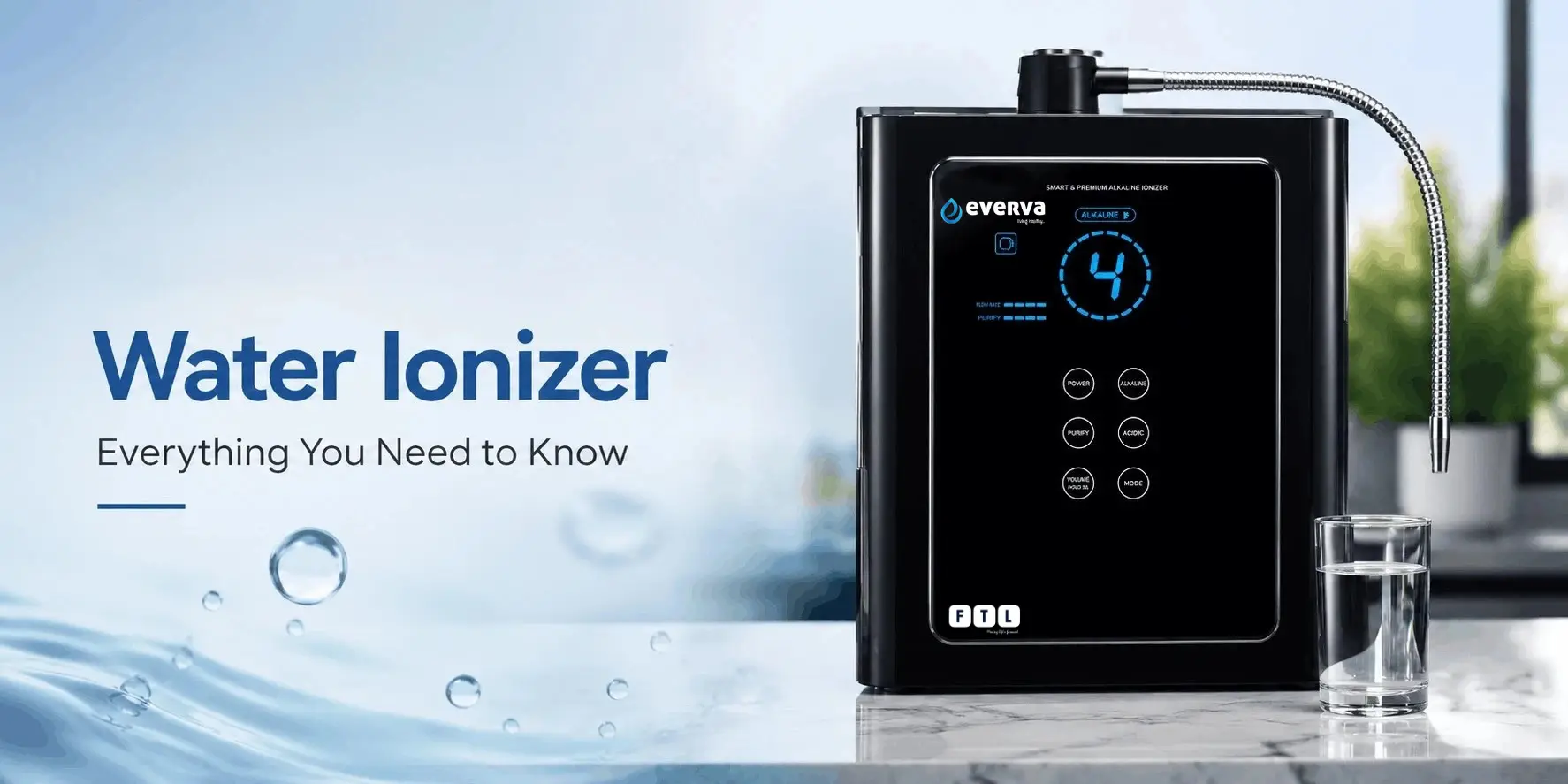
Most of us grew up thinking “clean water” and “healthy water” meant the same thing. If it passed through an RO purifier, it was good enough. But clean and healthy aren’t always the same. An RO purifier removes impurities. A water ionizer goes a step further and changes the structure of the water itself. If you’ve been searching for what that actually means, here’s a clear, no-fluff explanation.
First, What Does a Water Ionizer Actually Do?
A water ionizer is a device that uses electrolysis to split ordinary tap or purified water into two streams: alkaline water and acidic water.
Here’s the simple version of how it works
Water passes over electrode plates, usually platinum-coated titanium. An electric current is applied. This process separates the minerals naturally present in water, pulling calcium, magnesium, and potassium ions toward one side and hydrogen ions toward the other.
The result is
- Alkaline water — higher pH, mineral-rich, used for drinking
- Acidic water — lower pH, typically used for skin care or cleaning, not for drinking
This process is called ionization, which is where the term “water ionizer” comes from.
Water Ionizer vs. RO Purifier: What’s the Real Difference?
This is where most people get confused, so let’s break it down plainly.
An RO purifier’s job is removal. It pushes water through a fine membrane to filter out dissolved solids, bacteria, and contaminants. It’s effective at making water safe, but it also strips out beneficial minerals along the way, which is why RO water often tastes flat.
A water ionizer’s job is transformation. It doesn’t just filter; it restructures the water through electrolysis, adjusting its pH and enhancing its mineral content and antioxidant properties.
Think of it this way: an RO purifier answers the question, “Is this water safe to drink?” A water ionizer answers a different question: “Is this water actually good for my body?”
Many households today use a purification stage followed by ionization, which gives you both safety and the added benefits of alkaline, mineral-rich water.
Why Alkaline Ionized Water Is Getting More Attention
The human body operates best within a fairly narrow pH range and in the presence of everyday factors. Diet, stress, processed food, and poor sleep can push the body toward higher acidity over time. Alkaline water is believed to help counterbalance this by neutralizing excess acidity.
Some of the commonly discussed benefits of alkaline ionized water include
- Better hydration due to smaller water clusters that may absorb more efficiently.
- Helps neutralize stomach acid imbalance by improving digestion.
- Antioxidant properties, since ionization can produce water rich in molecular hydrogen. This has been studied for its potential to combat oxidative stress.
- Mineral replenishment, since ionizers retain calcium, magnesium, and potassium instead of stripping them out as RO does.
- Support for skin hydration and overall energy levels.
It’s worth being honest here: research on alkaline water is still evolving, and it isn’t a cure or a substitute for medical care.
But the existing evidence around hydration, mineral intake, and antioxidant potential is compelling enough that alkaline ionized water is worth understanding, not dismissing.
How Is a Water Ionizer Different From Just Adding Alkaline Drops or Powder?
This is a common shortcut people try, but it isn’t the same thing. Alkaline drops or powders simply raise pH chemically, often using additives.
A water ionizer changes the water at a molecular level through electrolysis, without introducing chemicals. That’s the core difference between artificially alkaline water and genuinely ionized water.
Is Ionized Alkaline Water Safe to Drink Every Day?
Yes. Ionized water typically falls in a pH range of 8 to 9.5, which is considered safe for daily consumption for most healthy adults. It’s simply water with rebalanced pH and preserved minerals, not a chemical additive.
As with any dietary change, if you have specific kidney conditions or are under medical supervision, it’s worth checking with your doctor first.
Choosing a Water Ionizer: What Actually Matters
If you’re evaluating water ionizers, here are the factors that genuinely affect performance, not just marketing claims.
- Electrode plate quality: Platinum-coated titanium plates last longer and ionize more effectively than lower-grade alternatives
- Number of plates: More plates generally mean more thorough ionization
- Filtration stage: A good ionizer should filter water before ionizing it, not just electrify tap water
- pH range control: The ability to adjust alkalinity based on your need (drinking vs. cooking vs. skin care)
- Certifications and patents: Indicators of tested, reliable electrolysis technology
The Bigger Picture: Rethinking What “Healthy Water” Means
For years, the water conversation has stopped at “Is it filtered?” But filtration is only half the story. The other half is what water does once it’s in your body, how it hydrates you, and what minerals it carries.
A water ionizer doesn’t replace the need for clean water. It builds on it, turning purified water into something your body can use more effectively every single day.
At Everva, the shift we want more households to understand: healthy hydration isn’t just about removing what’s bad from water. It’s about restoring what’s good.
Want to understand which water ionizer fits your household’s needs? Book a free consultation with Everva and get expert guidance on healthier hydration.